Tuesday, October 15, 2019

New Book, TAKE ME TO THE GARDEN


David and his sister-in-law, Jonna Padgett, have collaborated on a book of poetry. It is available on Amazon.com

Take Me To The GardenTake Me To The Garden

by Jonna Padgett and David Young

Here is one of the poems included in the book.


LIGHTNING ON THE MOUNTAIN TOP


Standing on the thundering alp,

Drenched in heaven's driving tears

With bending knees and tingling scalp

My glasses whining in my ears;


He's drawn me to this holy place.

Shying from His glorious essence,

I'm wincing from His gleaming face,

Trembling in His holy presence.


Streamers reaching from my heart

Do not draw the heavens there.

Though I do my trembling part


Sunday, September 1, 2019

DID SOMEONE THROW THE DART? on answering questions in print


Answering questions before a live audience can be tricky business. I wonder if it is easier or sometimes better in print. Last night I listened to a recording of Eric Metaxis speaking on his book MIRACLES, at Rutgers University. The primary miracles Eric told about in his talk, outside of his own conversion, were on the fine tuning of the universe. Scientists say the chances of all the parameters of the universe coming about by chance approach 0%, and go beyond it. Eric condensed that part of his book into The Wallstreet Journal article, Science Increasingly Makes The Case for God. (https://www.wsj.com/articles/eric-metaxas-science-increasingly-makes-the-case-for-god-1419544568) That article, by the way, had more than 600,000 shares and 10,000 comments on line.

After his talk, Eric took questions. And I want to respond to one of the questions raised. The questioner asked about slim chance of the fine tuning of the cosmos. "If you had a dart board and you divided it into a trillion squares, and you threw a dart that hit one of the one in a trillion squares, it doesn't show skill or intention, if you didn't call it in advance. How is that different from the fine tuning of the universe?"

Okay, I would like to to try to answer this question. Let's propose the trial of the millenia. Let me change the details a little. Suppose investigators come into a room and find a mouse with a dart pinning it to the floor. The question arises, "Who threw the dart?" You and I are called to be on the jury. During the trial Attorney #1 claims someone with incredible skill threw the dart. Attorney #2 says this could have happened without anyone throwing the dart. He brings a witness who says the mouse may have always been there with a dart in it.

Attorney #1 brings a witness who shows by the blood on the floor, the mouse was alive when hit by the dart.

Attorney # 2 says the mouse did not have to be a moving target.

Attorney #1 brings a witness who says the odds are exceedingly great that the mouse was moving when the dart hit him. And he goes on to ask how a dart came to be in the room.

Attorney # 2 says it is possible that a million years ago there could have been a meteor shower. One of the meteorites could have had a metal shard in it. And as it fell it struck a tree. Eons passed, and all of the tree but the small part with the metal embedded in it was worn away by the weather and elements.

Attorney # 1 claims the dart could not have moved with such precision without being thrown.

The other says a freak wind could have swept through the house picking up the dart and flinging it into the mouse.

At some point you might want to say, I wonder if there is not some reason other than the arguments presented that make the sides pose what they are presenting.

And if we want to believe arguments for or against the reality or intervention of God in the universe, what is our motivation? The man seemed to assume that God did not say in advance what the parameters of cosmology would be. How would he have known that? He could not have been there to hear. You could not have heard either. But we might ask God to speak to us now. Wouldn't that settle the issue for you?

Now, whether you think this is a good answer or not, I would like to present it to people who struggle with the issue. And writing seems to be a good forum for this. When I heard this question, I could not think of a good answer. I thought the question oversimplified the issue of the fine tuning of the universe. And I knew at Rutgers, like many universities, there would be great cultural pressure not to believe in God. But in writing I had time to formulate a situational apologetic.

But I don't have readers who would raise the question. I write in a symbolic echo chamber. I primarily read and write with those who basically agree with me. I do not have a good solution for this. I wonder if some of you have experience, or even theories about how to do this, I would appreciate your responses.

http://watchinginprayer.blogspot.com/
http://thinkinginthespirit.blogspot.com/
http://writingprayerfully.blogspot.com/
http://theanchorofthesoul.blogspot.com/

Website
http://daveswatch.com/

YouTube
https://goo.gl/PyzU

Tuesday, July 23, 2019

FOOTNOTES

I just wrote one of my other blogs on Footnotes in the Bible. And it made me think of footnotes in general. Do you use footnotes when you write? I like footnotes. But before I say anything more, need to admit that footnotes are not popular in these days for a number of reasons. Maybe foremost among those reasons is that editors don't like them. That may not be a strong enough statement. Many editors hate them. And what writer wants to offend an editor? Magazines don't use them at all. If you are writing for a magazine, don't bother. Or rather, find a way to say what you need to without using a footnote. Having said all that, I still like to use them for several reasons.

First, I use them to maintain a little subtlety. I occasionally think of something to say that requires a certain amount of wit or background knowledge to understand. As a reader, I like to figure those things out. Years ago I wrote a magazine article entitled, Filling The Unforgiving Minute. This comes from Kipling's poem, IF. The magazine needed me to tell readers where this came from in the text. But I am now including that article in a book I am writing on hope. Here I would like to give readers the opportunity to remember where the line comes from. But I also want to write a note to those who don't remember.

We also need footnotes to record Sources for what we write. This is crucial for technical writing, or for arguments that make a point. I once heard a joke on preachers who rattle off a lot of statistics in their sermons.

"87% of all quoted statistics are made up on the spot."

If someone wants to quote me in a speech or in writing, I want them to know where I got what I have written.

And footnotes are great for Clarification. In a note I can say, "I meant this." or "I didn't mean that."

I also like to make side Comments in some of what I write. You might call these wisecracks. In my book, JOY, I quoted something from The Magician's Nephew, by C.S.Lewis. I said in the text that this book was the sixth in the Narnia Chronicles and a prequel to the other books. But in a footnote I commented on a publication of the Narnia books that listed The Magician's Nephew as the first book in the series because it would have been first chronologically. I said those who listed the book so were "Philistines."

For whatever reason, footnotes are a means of adding depth to what we write. And even though most readers are in too much of a hurry to bother with them, there is pleasure in such notes for those who take the trouble to read them.

http://thinkinginthespirit.blogspot.com/
http://theanchorofthesoul.blogspot.com/
http://watchinginprayer.blogspot.com/
http://writingprayerfully.blogspot.com/

Website
http://daveswatch.com/

YouTube
https://goo.gl/PyzU

Saturday, July 20, 2019

A WRITING SABBATH

Do you take a Sabbath from your writing. I recommend it, if you can. I say, if you can, because many of you write while maintaining a real job. And you won't write much if don't write in every free moment you can muster.

But after retiring from active pastoring, I began trying to write full-time. At that point, God was convicting me of not taking days off, or taking time for spiritual and physical renewal in my 45 or so years as a pastor. So I begin full-time writing with a Sabbath. I don't write or work on my writing from Friday evening to Saturday evening. And I have found it rewarding in a number of ways.

First, I have not had to deal with burn-out. Most of the time I chaffe when I quit at 6:00 on Fridays, because the juices are flowing. Frankly, this keeps me motivated. The break always refreshes my passion for what I am writing.

I also gain inspiration in a Sabbath. I do not necessarily recommend that you stop thinking about your writing on a Sabbath, whenever you try to take it. But some of my best ideas come when I am not thinking about writing at all. If I didn't discipline myself a little, I would hardly ever have a time I was not thinking about my writing. And I discipline myself not to write down ideas that come to me in my rest. I will not argue with you who are shocked by that. But I feel like great ideas will continue to nag at me after the Sabbath. In a question and answer time at a Writers' Conference, Steven King was asked about keeping a Writer's notebook. He said "I think a Writer's notebook is a great way of immortalizing bad ideas." And if the Holy Spirit is my muse, I can trust Him to bring good ideas back to me.

Finally, and most closely related to Biblical observance of the Sabbath, by taking a break I acknowledge that God is the source of all writing. I show that I am trusting Him to help me think. I am asking God's help in finishing what I working on. A Sabbath declares that everything I am and have and do comes from God. I give it to Him much like I worship with a tithe of our income.

http://thinkinginthespirit.blogspot.com/

http://theanchorofthesoul.blogspot.com/

http://watchinginprayer.blogspot.com/

http://writingprayerfully.blogspot.com/


Website

http://daveswatch.com/


YouTube

https://goo.gl/PyzU


Sunday, July 7, 2019

CARVING OUT WHAT I NEED TO SAY

A friend recently noticed a cane carved for me by my brother-in-law. And he wondered what kind of power tools he used. I told him I thought he didn’t use much more than a pocket knife and sandpaper. He said, "That would be a lot of work!" I too have hand carved several walking sticks, although not as beautiful as my brother-in-law’s. And I find that, though painstaking, the work can be very satisfying.

I feel the same about the process of editing something I have written. I used to fear editing because I am not especially good at it. But I am in the process of editing a novel after completing the rough draft. And I find honing and polishing rewarding. I have no doubt that I am improving my work.

And while I try to saturate and punctuate all my writing with prayer, I actually pray more while editing. Especially with fiction, I try to get words down as rapidly as I can. At that point I do not pray or even think about how to say something. I admit that editing can be exhausting. But it is no less exciting or satisfying than writing a story in the first place.

In Letters and Life, on being a writer, on being a Christian, Brett Lott has a quote from John Berryman that I often put up where I can read it.

“You should always be trying to write a poem you are unable to write, a poem you lack the technique, the language, the courage to achieve.”

I like this quotation. I wish I had it on a coffee cup. But it does not depict the best way to improve my writing. In fact, I often find it intimidating. I improve by polishing what I write. When I write a poem, I put it with my daily prayer lists, and pray over it everyday. I change a word or a line every few days for several months. This method produces better poems than I thought I could write. My writing only becomes readable as I polish it day after day.

Of course, I do not ruminate for months on my blog posts. But I never post one without waiting until the next day after completing it. And I always find ways to make them better.

http://thinkinginthespirit.blogspot.com/

http://theanchorofthesoul.blogspot.com/

http://watchinginprayer.blogspot.com/

http://writingprayerfully.blogspot.com/


Website
http://daveswatch.com/

YouTube
https://goo.gl/PyzU

Sunday, June 9, 2019

WHY DO I WRITE?

I write as a ministry. And I pray that people will come face to face with the Living God in my writings.

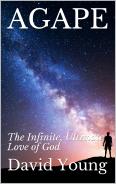
One of my books was just released, AGAPE, The Infinite, Ultimate Love of God. I pray that God will touch the lives of people through this book. I do pray that it will sell well. I pray, and I ask you to pray with me, that God will use it to touch the lives of people around the world.

I pray that God will allow me to write more books. And I pray that He will do more in the lives of more and more people with each book that He allows me to write.

AGAPE: The Infinite, Ultimate Love of God (FAITH, HOPE, & LOVE Book 1)

by David Young (FAITH, HOPE, & LOVE Book 1)

https://www.amazon.com/AGAPE-Infinite-Ultimate-Love-FAITH-ebook/dp/B07SHYCLSK/ref=sr_1_1?keywords=AGAPE%2C+The+Infinite%2C+Ultimate+Love+of+God&qid=1560098328&s=gateway&sr=8-1


http://writingprayerfully.blogspot.com/

http://theanchorofthesoul.blogspot.com/

http://watchinginprayer.blogspot.com/

http://thinkinginthespirit.blogspot.com/


Website

http://daveswatch.com/


YouTube

https://goo.gl/PyzU