Friday, September 25, 2020


“Unless you see signs and wonders you will not believe.”

John 4:48                                      
                              

Our visit to Sychar was as amazing us as it was to the Samaritans. We had always been taught that they were unclean. And at least James and I had reason to fear them. I won't go into that now. But Jesus marched us into Samaria as bold as you please. We stopped at the ancient well of Jacob. Jesus rested by the well and sent the rest of us to the nearby town of Sychar to buy food. I wondered if it was safe to leave Jesus alone, but no one would come to the well in the hottest part of the day. And, to be honest, we felt that it would be safer if we went with a larger group into town.

When we returned Jesus was talking with a woman. But none of us dared ask him what he needed or why he was talking to a Samaritan woman. Whatever they were talking about seemed to upset her. She left her water jar and ran off toward town. 

When she was gone, we started urging Jesus to eat, but he refused. We were wondering how he could have found anything to eat. He said his food was to do his father's will.

We divided what we had purchased among ourselves and sat down to eat. As we were finishing, Jesus said, "Don't you have a saying, 'Four more months, and then the harvest?' Lift up your eyes and see. The fields are white for harvest." We automatically looked up and saw hundreds of people were coming from the town. Their robes were the color of a ripe wheat field. 

Evidently on the word of the woman he had been talking to, many of them believed Jesus was the Christ. They asked him to stay for a while. We stayed there two more days, and in that short time, hundreds of Samaritans came to believe that Jesus was the Savior of the world.

As we went on from there Jesus reminded us of something He had said earlier. "A prophet has no honor in his own country." But as we came back into Galilee, the people received him after all. They had been to the Passover in Jerusalem and had seen the amazing signs that he did there. We went first to Cana where he had turned the water into wine at the wedding feast.

One morning when he rose early to go out and pray, we roused ourselves and went out with him. It was getting light in the east when he rose from prayer and began to talk to us.

"Why do you think I have been received here in Galilee where they tried to stone me earlier?" We talked about it among ourselves. It seemed obvious to us that it was because they had seen him perform signs and wonders at the Passover. 

Then he asked us, "Why then did the Samaritans put their faith in me? Had they been to Jerusalem as well?" Several of us chuckled at this. There is no way Samaritans had been to the Passover. He continued, "There is danger for people to only believe because they see miracles." Simon argued a little with this. 

"Master I believed because I saw you fill our nets with an impossibly large catch of fish."

Jesus said, "Was that your only reason, Simon? Had your heart not already been convicted by some of my teaching?" Simon ducked his head. "I knew that you would believe, Simon, when you saw the miracle. But there is a danger of people who see signs and wonders believing against their will. They are not repenting. They don't want to follow me. But they know that I have to be the Christ to have done such signs."

My brother James said, "Then why do you perform signs and wonders?"

"My father gives these signs so people will know that I am indeed the Christ. I have given you authority to do some of the same works that I do. And as the gospel spreads to the ends of the earth, he will often do such miracles so people who will come to me will know that I am the Savior of the world. But those who only believe because they see signs, will search hard for some explanation that will not require them to continue to believe in me. Some will only continue to believe if they see a miracle every day."

Just then the sun peaked over the mountains and shown down on us. We could not help but turn and look at the glorious sunrise. 

Jesus said, "Is that not a wonderful sign? Only my father could set the sun in the sky or create the stars you see at night."

Thomas said, "That's not a miracle. It happens every day."

Jesus answered, "And if people saw signs and wonders everyday, they would begin to say, that's not a miracle. It happens all the time."


http://thinkinginthespirit.blogspot.com/

http://theanchorofthesoul.blogspot.com/

http://watchinginprayer.blogspot.com/

http://writingprayerfully.blogspot.com/


Website

http://daveswatch.com/


YouTube

https://goo.gl/PyzU

Facebook

https://www.facebook.com/bdavidyoung49


Wednesday, August 26, 2020

A GATHERING

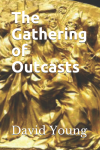
   A GATHERING OF OUTCASTS, my new book of short stories will soon be released. If you are interested, I would like to send you one of the stories without cost to you. Send me the email address you would like to use, and I will send you the story. 


Sincerely, 


David Young

daveswatch@gmail.com


A GATHERING OF OUTCASTS


MC900382613[1]                     David Young     18203-WDAN-AW.PNG

                                              daveswatch@gmail.com

                                                            613 Terrace St.

                                                             Carson City, NV 89703

                                                                                       775-301-066


 A GATHERING OF OUTCASTS, my new book of short stories will soon be released. If you are interested, I would like to send you one of the stories without cost to you. Send me the email address you would like to use, and I will send you the story. 


Sincerely, 


David Young

daveswatch@gmail.com


Saturday, July 4, 2020

METAPHORS FOR CHRISTIAN WRITERS


As writers we deal with words, and most of us love them.

*Every poet looks for…

Words that cry, words that sting

Words that shine, words that ring

Words that fly, words that sing,

Words that say the many splendored thing.

The biblical languages are filled with vivid metaphors to help us understand deep and crucial truths. Three of them come to mind that apply wonderfully to us as Christian Writers. They are Angel, Apostle, and Deacon.

ANGEL

ἄγγελος

“To the angel of the church in Ephesus write: ‘The words of him who holds the seven stars in his right hand, who walks among the seven golden lampstand”
Revelation 2:1

The word angel means messenger. And while it is certainly applied to heavenly beings like in John 1 where Jesus told Nathaniel he would see the heavens opened and the angels of God ascending and descending upon the Son of Man. But it doesn't always refer to heavenly beings. When Jesus quoted Malachi saying "I will send my messenger before you." He used the word angelos, but John the Baptist fulfilled that prophecy. In Revelation 2 and 3 when Jesus addressed the angels of the churches, I suspect He was telling John to take His words to the messengers or preachers in the churches.
As a writer you too are an angel. You have a message from God for the hearts of your readers.

Apostle

ἀπόστολος

“Paul, an apostle of Christ Jesus by the will of God,”
Ephesians 1:1

Apostle is another important metaphor for you. The word Apostle is used for more than the 12 chosen by Jesus at the beginning of His ministry. Of course Paul calls himself an apostle. He also calls Barnabas and Silas apostles. Hebrews 3:1 calls Jesus our apostle and high priest. In Romans 16 Paul greeted Andronicus and Junia who were well known among the apostles.

The word means sent out. In John 1:6 the verb form of apostle is used to say, “There was a man sent from God.” You have also been commissioned by God to write. There is an urgency to your mission.

Deacon

διάκονος

“For those who serve well as deacons gain a good standing for themselves and also great confidence in the faith that is in Christ Jesus.”
1 Timothy 3:13

The word deacon was one of the primary words used for a servant in the Roman world. The church applied the word to those who minister to the needs of others.

In Romans 16:1 Paul wrote the church about a lady named Phoebe.
“I commend to you our sister Phoebe, a servant of the church at Cenchreae.”
Here the word translated, “servant,” is the word deaconos-deacon. Without slipping off into the question as to whether the term was used formally here, let me point out that you are called to address human needs.

*From Worth A Thousand Pictures, from the book, Take Me To The Garden

http://thinkinginthespirit.blogspot.com/
http://theanchorofthesoul.blogspot.com/
http://watchinginprayer.blogspot.com/
http://writingprayerfully.blogspot.com/

Website
http://daveswatch.com/

YouTube
https://goo.gl/PyzU

Amazon Author's Page
https://www.amazon.com/David-Young/e/B008C7VLAQ/ref=dp_byline_cont_ebooks_1


Tuesday, June 16, 2020

WE ARE ALL GULLIBLE AT DIFFERENT POINTS


I have recently been enthralled by some of the writing of Rachel Held Evans. She has written some powerful things illuminated by thrilling stories. It may not surprise you that I do not agree with her in some points. But I do recognize her as a fellow believer in Christ.

In honest disclosure, at the beginning of her book Inspired she gave a long list of theologians who had influenced her thinking. I had only heard of one of them. I looked up each one, but I would not dare describe their positions without having read a single book by those I didn't know. It was interesting to me that her list began with some pretty far out Old Testament scholars, and proceeded to some really sound New Testament scholars climaxing with N.T. Wright whose books I have read and love.

I have read two of Rachel Held Evans's books, Looking For Sunday, and Inspired. Especially in Inspired, Rachel (if you will grant me the privilege of calling her by her given name here) tells marvelous stories. She is one of the best storytellers I have ever read. Her portrayal of the gospel as story is accurate and illuminating. Even when I didn't agree with Rachel's point, I was captivated by her stories. But her main arguments for her doubts were close to tantrums that God did things and others believed things of which she didn't approve. I have to admit that I also hold some of her criticisms. And I recognize that she tried to balance criticism with love. But she presents things like authorship of Leviticus or Colossians as well as statements about the dates of certain books of the Bible as unquestioned facts. She admirably makes fun of her doubts, but I would have been happier had she pointed out that some of the arguments for those things don't make sense. But I come from a different perspective. And I recognize that there are people who have been taught those things and believe them to whom she speaks more clearly than I ever could.

C.S. Lewis often dabbled with things in fiction that he would never have said in nonfiction. He was surrounded by people who were not believers. To them he was pointing out that even if things you believe are true, God is still God.

While Rachel undoubtedly adopted theological, moral and social notions that I believe are wrong and harmful, I believe she was also aware that she addressed a culture that has embraced them.

While I admit that I may be wrong in my convictions, I wish she had more doubts about her doubts.

If Rachel were still with us and writing, she might think my convictions are as gullible as I think her doubts are. From an earthly point of view it is a tragedy that she died so young. But she is in the presence of our Lord. I will be there before long. From the perspective of history and eternity we will all stand before God in the blink of an eye. At that point I doubt if we will care about the answers to these issues. Until then, I will seek to broaden my perspective while writing what I am convinced is true. I do wish I could tell stories as thrilling as she did. I pray that God will improve my ability with everything I write.

http://thinkinginthespirit.blogspot.com/
http://theanchorofthesoul.blogspot.com/
http://watchinginprayer.blogspot.com/
http://writingprayerfully.blogspot.com/

Website
http://daveswatch.com/

YouTube
https://goo.gl/PyzU

Amazon Author's Page
https://www.amazon.com/David-Young/e/B008C7VLAQ/ref=dp_byline_cont_ebooks_1

Sunday, April 19, 2020

DEVELOPING THE SOUL OF A WRITER

DEVELOPING THE SOUL OF A WRITER


While this quarantine is difficult for people all over the world, it is not quite as hard on writers. I do not simply mean that people need our reading material to fill the time. Writers need solitude to write. While many of us have had to learn to write in the midst of the hubbub, it always helps to be alone. This doesn't mean that we are not going stir crazy like everyone else. But this is an opportunity of which we must take advantage. Since most writers support ourselves with day jobs, you may find that you have more time to write than ever before. That is true even if you're having trouble paying the rent.

This is also an important time for a Christian to develop the character and the depth of your soul as a writer. I actually began this nearly a year before the pandemic broke out. The quarantine is a good opportunity to continue what I have begun. I am memorizing the Bible like never before. I do not memorize to have important things to quote in my writing or to impress my friends at church. I memorize Scripture so that God will plant His mind, His insights, His character in me. The mind of Christ is essential for growing as a writer.

I am going through the New Testament taking an entire week with each chapter. I read the whole chapter every day for a week. Each day I memorize a portion of that chapter, usually getting the entire chapter memorized in a week. I start by reading over the first verse of the chapter until I can say it. Next, I read over the second verse until I can say it. Then I go back and read both verses together and go on to the third verse. If I am working on 1 John, two or maybe three verses will be all I need to memorize each day. If I am trying to memorize a chapter, say early in Luke, with over 60 verses, I need to memorize more each day, and I often take a little more than a week to memorize it. After I have memorized a chapter, I review it every day for two weeks. This way I am working on three chapters of Scripture all the time. To review the passages, I use the same process as my memorization. I read the first verse in the passage over until I can say it. Usually the second day I have to memorize it all over again. I go on from there to the next and then the next. I often stumble over verses I have been reviewing for weeks. If I think I am in some kind of competition, I will be discouraged. But this is between me and God, and I trust Him to be working in my life as I spend the time with Him.

I do not have a photographic memory. I could not begin to quote verses that I memorized 6 months ago without reviewing them again. But in the process of memorizing and especially reviewing, God's Spirit works on my heart. He uses His word to plant Himself in me. Although I am writing something that tends to consume my time and thoughts, I am convinced that Scripture memory is my most crucial task in these days.

http://thinkinginthespirit.blogspot.com/
http://theanchorofthesoul.blogspot.com/
http://watchinginprayer.blogspot.com/
http://writingprayerfully.blogspot.com/

Website
http://daveswatch.com/

YouTube
https://goo.gl/PyzU

Amazon Author's Page
https://www.amazon.com/David-Young/e/B008C7VLAQ/ref=dp_byline_cont_ebooks_1