Thursday, April 22, 2021

LIGHT

Several of us who were baptized in that first week after the Spirit came upon the church were remembering things we had heard Jesus say before we believed and understood. We were still having some difficulty understanding. Dorcus suggested that we ask some of the apostles to explain these things. That made sense to the rest of us, and we began searching the temple area for apostles. We found several of them praying in Solomon’s colonnade. Thomas, Phillip, Bartholomew, and Mary were there along with several others that we had seen but did not really know.

Several of us were not comfortable with a woman speaking for us, but somehow Dorcus’s boldness seemed right. She stood before the praying group until they noticed us. They turned to us with holy smiles. 

“What can we do for you?” Thomas asked.

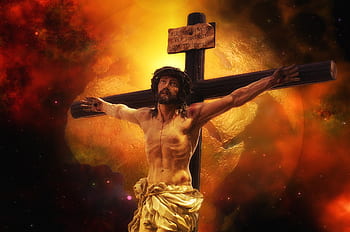
Dorcus looked around at the rest of us and began. “Before His crucifixion Jesus told us ‘The Son of Man must be lifted up.’ And even then we were pretty sure He was speaking about the way He was going to die. But the rabbis had always taught that when the Messiah came he would remain forever. Of course we did not understand how He could die, if He was indeed the Christ. Jesus did not tell us how this would be. He simply said we needed to walk in His light lest darkness overtake us. We understand a little more of this now, but we need you to explain about the light.”

Phillip, one of the apostles in the prayer meeting said, “I didn’t really understand at that time either. But on that same day Jesus said, ‘The words that I say came from my Father. He gave the commands of what to say and what to speak.’ Walking in the light is living by what His Father says to us through Jesus.” 

Thomas said, “That is true even when there are some things we cannot understand.”

Martha, one of the women in the prayer meeting said, “You probably know that Jesus called my brother to come out of the tomb and raised him from death. We had sent for Jesus when we knew Lazarus was about to die. We were heartbroken when He did not come to heal him. When Jesus did come, He told me my brother would rise again. I still did not understand, but Jesus knew what He was going to do. It was hard in those days to believe Jesus still loved us, but of course, He did.”

“That is right,” Thomas said. “When we heard that Lazarus was sick, Jesus told us, ‘This illness will not end in death but in the glory of God so that the Son of God might be glorified. So we stayed where we were. After a few days Jesus said, ‘We are now going back to Judea.’ We were terrified. We had fled because the people were ready to stone Him to death. We said as much to Jesus. He said, ‘Are there not twelve hours in the day. If anyone walks in the day he will not stumble. We must do the works of Him who sent me while it is day.’ Then Jesus explained that Lazarus was already dead. He knew that because He prayed and listened to His Father all the time.”

We never understand everything our Lord is doing in our lives. But it seems that He has always shown us something that is His will, so we can walk in His light. One of the things the Spirit does in us and in the whole church is give us the light to follow Him. This is a continuing miracle that we experience. We are all learning to sense the Father’s will and walk in His light.


This story rose from words and events recorded in John 11 and 12.


Father, open our eyes to the light of Jesus in our daily lives.


http://thinkinginthespirit.blogspot.com/

http://theanchorofthesoul.blogspot.com/

http://watchinginprayer.blogspot.com/

http://writingprayerfully.blogspot.com/


Website

http://daveswatch.com/


YouTube

https://goo.gl/PyzU

Amazon Author's Page

https://www.amazon.com/David-Young/e/B008C7VLAQ/ref=dp_byline_cont_ebooks_1


Thursday, April 8, 2021

THE SIGN OF AUTHORITY


I walked around in a joyous daze after Jesus raised my brother from the grave. But Jesus knew there was danger there for Him, for all of us. Many people who came to comfort my sister and me after our brother’s death believed in Jesus when they saw what He did. Others went immediately to tell the Pharisees. Jesus took His closest disciples east into the wilderness to spend time alone with us. The 12 were with Him and a few others including some of the ladies who followed Him from Galilee. I was part of that group even though I now live with my sister in Judea. 

At one point in His teaching Jesus singled me out. “Mary, you heard me say  in Jerusalem, ‘No one takes my life from me. I lay it down of my own accord. I have authority to lay it down. And I have the authority to take it up again. I received this charge from my Father.’ Do you think the people understood what I was saying?”

“No,” I said. I am sure they did not.

“Did you understand me?”

“No, Master. I still don’t fully understand what you meant.”

“Even after you saw your brother stumble out of the tomb?”

“Well, yes, Lord, I guess I see that you have authority even over life and death.”

Jesus looked around at all of us, “Do you remember when some of the Jews surrounded me at the Feast of Dedication demanding that I tell them plainly if I were the Messiah?” Several of us nodded, but no one spoke. “I said I had already told them, and they did not believe. Do you remember me telling them I was the Christ?” We all looked at one another.

Thomas answered, “I don’t think I heard you say that to them in so many words.”

Jesus nodded. “How then did I tell them?” Thomas frowned not wanting to venture an answer. 

Finally, Peter said, “Opening the eyes of a man who had been born blind was a pretty good start.”

Jesus nodded and said, “You heard me say that my Father has given me the authority to lay down my life and the authority to take it up again. But you say you did not understand those words.” He glanced at me. “How did I say it more boldly?”

One of the other disciples answered before I could get the words out. “You showed us when you called Mary’s brother out of that tomb.”

Jesus said, “Earlier I had said ‘I am the Good Shepherd, and my sheep hear my voice’' They did not understand when I opened the eyes of the blind man because they were not part of my flock. You are my flock. I told you that my sheep hear my voice and follow me. They will never perish but will have eternal life.

“Mary, before I raised Lazarus, I told your sister that I am the resurrection and the life. Whoever believes in me will live even though he dies. How did I say that?”

This time I was ready with the answer. “You showed us by raising Lazarus from the dead.”

“That is right, and I will yet tell you in a more powerful way. You are not ready to understand although you hear me say it. You will soon hear in a way that you will never forget. You need to know that you are my sheep. And others will hear my voice through you. You will face many dangers and difficulties. Many of you will lose your lives for the sake of this good news. My sheep are under my authority and under the authority of my Father. You have this charge from me and from my Father. This will give you great peace and courage in the face of whoever and whatever opposes you.”


This story was primarily taken from John 10:7-18

Have you heard His voice? We can trust our lives to the authority of God and of His Son, Jesus Christ.

http://thinkinginthespirit.blogspot.com/

http://theanchorofthesoul.blogspot.com/

http://watchinginprayer.blogspot.com/

http://writingprayerfully.blogspot.com/


Website

http://daveswatch.com/


YouTube

https://goo.gl/PyzU

Amazon Author's Page

https://www.amazon.com/David-Young/e/B008C7VLAQ/ref=dp_byline_cont_ebooks_1


Thursday, March 25, 2021

HEARING HIS VOICE


I was standing near the river remembering some good times we had had in this remote setting. We had been here many times before. We had just come from Jerusalem to this place where John first baptized. This week Jesus barely got away from the Chief Priests and the Pharisees. The crowd had picked up rocks to stone Jesus. I thought they had Him for sure. 

Peter broke into my reverie, “Thomas, people seem to have found out where we are. There are not many here today, but Jesus says more will come. We need to help spread them out so they will not trample each other. And we need to keep the area near the river clear so Jesus can teach the multitudes and we can baptise. I sent James to direct people in here from the road. I need you to meet them here and keep them from camping right on the river.” 

For months Jesus had seemed to be telling us that He would be arrested by the Chief Priests and handed over to the Romans. I wonder if we misunderstood Him when He said those things. At least He got away from them this time. If we had not been so afraid it would have been funny. One man was shouting that he had Him. Another one of them was screaming that the man had hold of him instead of Jesus. They were still scrambling around after Him as we left the city by back roads. He led us down across the Jordan to this place in the wilderness where John first baptized people. And it looked like He was going to be popular again.

“More and more people found their way to us. Directing the people became a big job. After a few days of Jesus teaching we began to baptise people. Most of them had seen miracles in Jerusalem. I was standing out in the water having just baptised a large family when I saw a man and wife with two daughters coming down to the river. He looked to me like a Pharisee. As he came nearer I was pretty sure I recognized him as one of the men who had argued with Jesus in Jerusalem. I suspected he was here to cause trouble. I would need to question him thoroughly before I could baptise this family. I looked around to see if Jesus or even some of the other disciples would help me. Then I realized that the man that I had just baptised with his two grown sons had confronted this Pharisee. They were speaking loudly and close enough to the river bank that I heard every word. 

The father whose name was Jonah demanded, “Aren’t you one of the people who tried to stone Jesus a few days ago in the city?” The man bowed his head in what looked to me like shame and said something I could not hear. Jude, Jonah’s eldest son, stepped up beside his father. Somehow the fact that Jonah and his sons were soaking wet seemed to accentuate their anger. 

“We think you need to explain yourself,” Jude said. “Why are you even here? Who told you where Jesus would be?” He looked around as if someone in the crowd had betrayed Jesus to the Pharisees. “You have to give an answer. And this whole crowd wants to hear, so you had better speak up.” 

The man remained silent for several uncomfortable minutes. Finally he said, “I am afraid I have some shameful things to confess. And I ask that my wife and daughters not be molested if you decide to punish me.”

The man’s humble tone struck them all. Miriam, the wife of Jonah stepped up and said, “We will not harm any of you. Please tell us your names.” I thought knowing their names might help keep this from being another confrontation like we had in Jerusalem. Miriam’s husband and sons seemed to agree.

“My name is Justice,” the man answered. “This is my wife, Deborah. And these are our daughters.” He did not mention the girls’ names. I climbed up onto the riverbank. I was the only one of the 12 disciples who had come near. I learned later that, although I had not seen, Jesus motioned for us to stay back and let the drama play out. Something occurred to me as I came even nearer. When the Pharisees had shown up to confront Jesus in the past they never had their families with them. 

Justice had begun to speak. He said, “I was indeed part of the group, I suppose I was even a leader of those who wanted to arrest the Master.” I was struck by the tone in which he said, ‘Master.’ He continued, “I was one of the men who asked the blind man’s parents how he could see, if he were really born blind. And while I didn’t pick up a stone, I was standing there with them. I have been with others who confronted Jesus, but for some reason I had never really listened to Him. I confess that I did not at all understand what He was saying that day about being the true shepherd. But His words were somehow comforting. One of us said that Jesus had a demon, and we should not listen to Jesus at all. Others said those were not the words of one who had a demon. As we were threatening Him, Jesus asked for which of the good works that His Father had done through Him were we going to stone Him. It seemed obvious to me that Jesus was either demonized or He was the Son of God. I didn't see how there could be any other options. The main way He told us His identity was by doing works only God could do. When Jesus said, ‘Even if you do not believe me, believe the works my Father gave me to do,’ I realized that He was giving us an invitation to believe and understand.

“In the turmoil that followed I was not sure if Jesus had got away. I went home and told my wife all of these things. One of our servants overheard me and said that Jesus might have come to this place on the river. He had already been baptized but he came here with us. My wife and daughters had come to believe before we arrived here. We understood from our servant that being baptized was the way we could say that we believe Jesus is the Messiah.”

I was aghast that the others had moved aside and the Pharisee’s family was now coming my way. I nearly fell as I backed into the water. Justice came to me first. I had hardly baptized him when I saw Phillip preparing to baptize his wife. Two others then baptized their daughters. All the crowd began to sing praise to God and to His Son. 

This story was taken from John 10.

Lord, you must be who you showed us you were rather than a demon from hell. We place our faith in you.


http://thinkinginthespirit.blogspot.com/

http://theanchorofthesoul.blogspot.com/

http://watchinginprayer.blogspot.com/

http://writingprayerfully.blogspot.com/


Website

http://daveswatch.com/


YouTube

https://goo.gl/PyzU

Amazon Author's Page

https://www.amazon.com/David-Young/e/B008C7VLAQ/ref=dp_byline_cont_ebooks_1


Thursday, March 11, 2021

THE SIGN OF BLINDNESS


There was always great excitement in those early meetings of the church in Jerusalem. The opposition mounted by the leaders of our people and even Roman authorities added to the thrill of gathering in the name of Jesus. Some of us met every day of the week. Our largest gatherings were on Sundays because we did not have to compete with the Sabbath services led by the priests, although many of us still preferred our Sabbath traditions. People began gathering in the outer courts of the temple at daylight. Many slaves and laborers had to work on Sunday and every other day as well. We began the day singing psalms and new hymns that were being written. We worshipped and encouraged one another for hours before the Apostles addressed the entire fellowship. On one particular Sunday, Peter stood as usual, and we all became as quiet as possible to hear what he would say.

He began, “My brothers and sisters, today I want to tell you about something Jesus did here in Jerusalem. We passed a beggar at the edge of a market who had been blind from birth. We asked Jesus, ‘Rabbi, who sinned, this man or his parents that he was born blind?’ Jesus said, ‘It was not because this man sinned or because of anything his parents did. This happened so that the work of God might be revealed in his life.’

“I would like you to think about how important that man had to be in the Kingdom of God. Every evil and painful thing he had endured happened so the works of God might be revealed. You also need to see how important you must be in the Kingdom of God. Every bad thing that blind man endured happened so that the works of God might be revealed to you.

“Through the blind man Jesus gave us a parable. ‘While I am in the world,’ He said, ‘I am the light of the world.’ And He spat on the ground and made clay. He took the clay and anointed the man’s eyes, and told him to go wash in the Pool of Siloam where his eyes were opened. Jesus was showing us that His presence would open our eyes to the things of God even in the ordinary dirt of this world.

“We have something exciting to share with you today,” Peter said, “That man, who has not lived in the city for a while, has returned to visit his parents who often worship here with us. He came this week to visit an Apostle that he knew well. And he has agreed to speak to you this morning.” Peter then turned and welcomed a man onto the platform. All the people crowded nearer not expecting his voice to be as strong as Peter’s. His voice was not loud, but he had an anointing of the Holy Spirit similar to Peter’s, and the sound of his words carried to the far reaches of the crowd.

“My name is Liscus. Greetings in the blessed name of our Lord Jesus the Christ.” Liscus had said no more than this when the entire church began to sing.

“Praise the Lord!

Praise the Lord, O my soul!

I will praise the Lord as long as I live;

I will sing praises to my God while I have my being.”

When we came to the words,

“The Lord opens the eyes of the blind,” 

some of the ladies sang a high counterpoint to the men’s lower notes. Tears were spilling from the eyes of Liscus as the psalm concluded,

“Our Lord will reign for ever,

His Father to all generations.

Praise the Lord!”

When the congregation became silent again Liscus said “I am always thrilled to praise our Lord for all His wonderful works. One of my first vivid memories is of falling on my knees before Him.

“Our dear brother Peter was right when he said that everything that happened to me came about to reveal God’s works. However, I do not have many clear memories from the years before Jesus opened my eyes. I do remember the pain of occasionally being shoved or falling. And I remember an unnamed fear that often came over me. My clearest memories were of words and sounds that I heard. I remember my father reading the Torah on the Sabbath. I remember my mother singing over me at night. And I remember hearing the Rabbis teach when they didn't know I had snuck into the temple. But no memory is as bright in my mind as everything that has happened after Jesus came along. I remember hearing Him talk about me to His disciples even before He opened my eyes. And I remember his gentle touch as He put His hand on my shoulder and told me he was going to anoint my eyes with clay. 

“When I came back from the pool where he had sent me with my eyes open, those who had seen me begging were stunned. Some of them began to say, ‘Isn’t this the blind man who sat here begging?’ Others said, ‘It can’t be him, but he certainly looks like him.’ But I kept insisting, ‘I am the same man.’

“After I had convinced them, they took me to see the Pharisees in the yeshiva school at the temple. I don’t suppose I need to tell you that was a little frightening. They made me tell them every detail of my healing. The most outspoken of them were aghast that Jesus healed me on a Sabbath as if my healing was not an appropriate expression of worship. They said, ‘This Jesus cannot be from God. He does not keep the Sabbath.’ But others asked how a sinner could give us such signs?’ Some of the Pharisees asked what I thought about him. ‘After all,’ they said, ‘he opened your eyes.’

“‘He is a prophet.’ I answered. I didn’t know what else to call him at that time, but I knew He had to have come from God. Most of the Pharisees did not believe I had been blind until they questioned my parents. Of course, the Pharisees completely intimidated them. They brought them up and they stood them beside me at the front of the hall and demanded, ‘Is this your son whom you say was born blind. How is it that he can now see?’ What could my parents say? I had told them that Jesus healed me. But the Pharisees had made it clear that anyone who confessed that Jesus was the Messiah should be put out of the synagogues. That would have been serious in Galilee or even Alexandria. But if you were cast out of a synagogue away from Jerusalem, you could probably still sneak into the temple on holy days. Being put out here meant you were no longer considered to be an Israelite.

They said, ‘We know that this is our son. And we know he was born blind. But we don’t know how he received his sight or who healed him. Ask him. He is of age. He can speak for himself.’ I had not left the temple when the Pharisees caught up with me again. They said, ‘Give glory to God. We know this man is a sinner.’ I answered, ‘I don’t know what kind of man he is, but I do know I was blind and now see.’

“They asked me to tell them again how Jesus had opened my eyes. I said, ‘I already told you, and you wouldn’t listen. Why do you want to hear it again? Do you want to become disciples of Jesus too?’ This enraged them. ‘You are his disciple. We are disciples of Moses. We know God spoke through Moses. We don’t even know where this fellow comes from.’

“By this time I was exasperated. I said, ‘This is amazing! You don’t know where this man comes from, and yet he opened my eyes. It has never been heard of that anyone opened the eyes of one who was born blind. How could he have done that if he were not from God?’ That was too much for them. They said, ‘You were born altogether in sin. And you dare to lecture us!” And they put me out permanently.

“Jesus had evidently heard that they had cast me out. He found me and asked if I believed in the Son of Man. I said, ‘Tell me who he is sir so I can believe in him.’ He said, ‘He is talking to you right now.’ I fell to my knees and worshipped Him. I continue to worship Him to this day.”

As the man stepped down we began to sing again. Before we had sung very long, John, one of the Apostles, stood up and motioned for our attention. When we had quieted down he said, “Jesus said some other things regarding this great sign that I think I should tell you. After Jesus told Liscus who He was, He said, ‘For judgment I have come into this world, that those who are blind may see, and that those who see may become blind.’ You need to know that our hearts are blind to the things of God. We can only see as Jesus opens the eyes of our hearts.

“Some of the Pharisees heard Jesus say this. They asked, ‘Are you saying we are blind?’ 

“Jesus said, ‘If you were blind you would not need to be forgiven for not seeing, but since you insist that you can see, your sin remains.’

“Earlier Jesus had said, ‘We must do the works of Him who sent me while it is day. Night is coming when no one can work.’ We join Jesus in doing the works of His Father. He sent Liscus to wash in the pool of Siloam. In Hebrew Siloam means “sent.” We are sent to the ends of the earth with the good news of Jesus. God did not send His Son into the world to condemn the world but that the world might me saved through Him. 


This story was conceived from the events recorded in John Chapter 9.


Father, open our eyes that we may see your works and believe with all our hearts in you.


http://thinkinginthespirit.blogspot.com/

http://theanchorofthesoul.blogspot.com/

http://watchinginprayer.blogspot.com/

http://writingprayerfully.blogspot.com/


Website

http://daveswatch.com/


YouTube

https://goo.gl/PyzU

Amazon Author Central page.


Thursday, February 25, 2021

THE SIGN OF HIS IDENTITY

Antony moved secretly through the city. He was not exactly dressed like the Jews in the city, but he was fairly certain no one would recognize him as a Roman Centurion. Still, he was looking in every direction to avoid anyone he might know as he made his way to the home of a man named John. John already knew he was a Centurion. Antony would have to be wary of him. He was a leader in the group sometimes calling itself The Way. The rapid growth of the followers of Jesus had surprised everyone, Pilate not the least. The Tribune assumed they were dangerous. He suspected that they were raising an army. Antony did not know one way or the other.  

He was now in the shabby neighborhood where John had sent word that he was living. He had no idea how to find the house. Suddenly he noticed several people approaching him. He gripped the sword concealed under his hooded cloak. They stopped about ten paces from him. He was surprised when a woman in the group stepped forward to speak.

“Are you Antonio Longinus?”

“How did you recognize me?” He demanded. 

She said, “John sent us to find you. And you seem to be the only one hiding your identity.” Antony had begun to perspire. He was relieved to throw back his hood and feel the breeze on his face.

“Call me Antony. I need to see this man called John.”

“We are all followers of Jesus. My name is Mary Magdalene. John sent us to bring you to his home.” The woman led the group. Several men surrounded Antony as they walked. They may have been trying to shield him from view, but they made him uncomfortable. Twice they changed streets. If he had not been met he would never have found the house. They stopped at a small cottage. It appeared to be well kept. The other men remained outside as Mary brought him into the house. John welcomed him and led him to a table with chairs. Many Syrian homes had low tables or mats, and the people sat on pillows rather than chairs. An older woman sat near the table obviously to listen to them. Wine was poured for both of them. When they had both sipped a little, Antony began the conversation.

“I have felt some urgency to speak with you. I know you are one of the leaders of this new Jewish cult. My men have been at your meetings on the temple grounds. They say that you are quite resolute that this Jesus who was crucified is alive. Is that the case?” 

“It is indeed,” John said. “I was one of those who spent time with Him after He arose.”

“My fellow officers think that is ridiculous.”

“If that is the case,” John said, “Why have you come to see me today?”

Antony asked, “Do you know who I am?” John did not respond. “I am aware that what I tell you next may end my chances of learning what I am desperate to know. But you will not understand if I do not tell you everything.” John nodded to him. Antony continued. “I was there when Jesus was crucified. I was the Centurion in charge.” Antony paused to consider John’s reaction. He could make little out of his expression. “I have seen many people die in war. I could not begin to know how many. And as a Roman officer I have participated in over a hundred crucifixions. No one ever died like that man. I cannot recount all the ways his death was different including the darkness and the earthquake. Aside from those things his words and his manor were not like anything I had ever imagined. 

“I had sent men to listen every time he was in Jerusalem. I even went myself when I could. I knew that you believed that there is only one god long before I came to Roman Syria. You may be aware that Jesus healed the servant of a Roman officer in Capernaum. I spoke with him and listened to what he had come to believe. I thought about what he said and I began to wonder if it were not true. I knew that Jesus talked about coming from his father. I understood that he was talking about your god, the god who made the earth and the stars. But when Jesus prayed on the cross, I got the feeling, I suppose I knew, he was really talking to God. The men with me were affected in the same way. I admitted then that only one who came from God could die like he did. I could not forget it even though I knew he was dead. 

I did not know what to think when a squadron of guards returned from his tomb terrified but unwilling to say what had happened to them. Later, representatives from the Jewish council came to vouch for the soldiers saying they had not really gone to sleep, but they needed them to say that. Why would they need them to say that unless they knew that something they wanted to hide had taken place at the tomb? I continued to wrestle with these things not knowing what to do about it. I have heard that you say he is somehow alive again. And I thought if he was a god, or as he seemed to be saying, the Son of God. . .” Antony fell silent.

John said, “You seem to have concluded much on your own. What do you need me to tell you?”

Antony said, “I don’t know what to ask. I suppose I should start with something I think Jesus taught that made little sense to me when I heard it. I need to know about forgiveness. I need to know if I could ever be forgiven for crucifying the Son of God.”

John said, “I think you need to know why Jesus died.” Antony frowned but did not speak. John continued, “You mentioned that you heard Jesus pray from the cross. Do you remember what He prayed?”

“One of my men speaks enough Aramaic that he told me the meaning of the loudest words he prayed. He said they meant something like, ‘My God, why have you forsaken me?’ Antony trembled at these words.

John said, “That is important. I will come back to that in a minute. Can you remember anything else He prayed?” Antony thought a little longer and shrugged as much to shake off some of the emotion that threatened to drown him as it was to say that he did not know. John said, “You said you knew Jesus taught about forgiveness. Do you remember anything He prayed about forgiveness while He was on the cross?”

Antony thought for a moment and said, “‘Father, forgive them.’ When he said that I think he looked at the men mocking him. He certainly looked down at me.”

John said, “I think you know or at least suspect that I was there that day. When Jesus said that, He also looked at me.”

“At you? But you were not mocking him. You did not put him on that cross. His blood could not have spilled on your hands and tunic.”

John continued, “Jesus taught us about our need for forgiveness. One of those times He said to the crowd, ‘I will soon go to Him who sent me, and you will die in your sins because where I go you cannot come.’ Jesus taught us that we are under a greater domination than that of Rome. All people are slaves to sin.”

“Antony said, “I am not sure I know what you mean.”

“I mean that sin has its grip on your heart. You have sinned all your life and cannot keep from sinning. You not only need forgiveness for crucifying Jesus, but for all the things you  have done that were wrong.”

Antony was silent until he could control his emotions. Then he said, “I know very little about the laws of your people and your god. You seem to believe that everything I do from working on Saturn’s day to missing your feasts are sin. I am sure some think it is a sin to be a Roman. Your god will surely not condemn me for all those things.”

John nodded. “I understand. But you do believe that some things are right and some are wrong, don’t you? I suspect you know there is such a thing as evil in this world.”

“I suppose I believe that,” Antony said. 

“And you have done things that you knew were wrong.” 

Antony nodded. “You are right, though I never thought of those things until we crucified Jesus. Now I have trouble sleeping.”

John paused a moment and then said, “What most sticks in your mind about being near Jesus. How did He make you feel?”

Antony said, “That is a difficult question. At the cross or from before? 

“Either,” John said.

“As we were crucifying him, I guess I felt guilty even though I was doing my duty.”

“What made you feel guilty?”

“I was thinking, ‘This man could not die like he did if he had ever done anything wrong.’ I think the people in the crowd must have felt that too, even as they mocked him.”

John said, “As you watched Him die with His clothing, His dignity and eventually his life stripped away, you couldn’t help seeing that His holiness remained. Do you know what that word means?”

“I know a little of how the Greek religions use the word.”

John explained, “Our Scriptures teach that holiness is absolute righteousness. This means more than not doing evil. Jesus said, ‘My Father is with me because I always do what pleases Him.’ But God could not be with us. None of us is holy. And if we are not forgiven, we will die in our sins and stand before a holy God. Jesus who always did what pleases God, was crucified in our place. He was rejected by God for us. He died to pay the penalty for our sins. And He rose from the grave to reconcile us to Him forever.”

“And that includes a Roman soldier?” Antony asked.

“That includes all of us. Those of us who recognize that Jesus was God with us, will not die in our sins.”

Antony said, “I need to think about this. I don’t think you know how much believing this will cost me.”

John said, “I think you have enough to digest from our talk. But I would be willing to meet with you and talk more about Jesus. I know you still have many questions.”

“That will not be possible. I am in danger from this meeting. If we began to meet regularly I would probably be put to death as a traitor. And besides, I am being transferred. I don’t even know where I will be sent.”

Before Antony could dawn his disguise and leave, John said, “You were able to understand all this about Jesus because God has been speaking to you. You came here because He drew you. Jesus told us He is the light of the world. Believing in Him begins to make sense of everything. Wherever you go you can ask God to speak to you. He will teach you. Before long many of us will be sent to places all over the empire. You will hear of us again.


The seed of his story came from John 8:28.


Lord Jesus, forgive us and transform us in Your holy presence.


http://thinkinginthespirit.blogspot.com/

http://theanchorofthesoul.blogspot.com/

http://watchinginprayer.blogspot.com/

http://writingprayerfully.blogspot.com/


Website

http://daveswatch.com/


YouTube

https://goo.gl/PyzU

Amazon Author Central page.


Wednesday, February 10, 2021

THE SIGN OF HIS HOLINESS

We came away from our study with Miriam stunned. For months several of us had been gathering at her home for study. Each week she would talk about something Jesus said. One of us might be puzzling over something Peter or one of the other apostles said about Jesus at the temple where the church was meeting. She explained and helped us see Him like we never had before. We always came away loving Jesus more than we could ever have imagined. We thought she must have been a lady of wonderful upbringing. I assumed she understood that God was our Father because she had such a wonderful earthly father. But this afternoon she told us about how she first came to know Jesus. We were all shocked at what she told us about her life.

She said she had grown up in the home of a strict Pharisee who never showed her any kindness. She was hardly more than a child when he gave her in marriage to an older man who treated her harshly. They had not been married long when he began to be unfaithful. He would be away from home for weeks at a time. She often did not have enough money to maintain the household. Then he would return with his clothes smelling of wine and perfume. 

During this time a young Pharisee befriended her. When he discovered that she did not have enough money to buy food he helped her. He began to see her everyday. He told her he was not married and that in the eyes of God she was not really married either because her husband was unfaithful. He continued to see her some even when her husband was not away. He convinced her that he would take her away from her husband and care properly for her.

He came to her home one day when her husband had beaten her. He spoke softly and comforted her. He carried her to her bed and began to treat her wounds. She told him about all the injustices her husband had foisted upon her. And they wound up in her bed. Suddenly a group of Pharisees burst into the room shouting and calling her a wicked woman. The man she had trusted joined the others in accusing her. She was hardly able to grab a covering for her body before they dragged her out into the street. They brought her to the temple courts where Jesus was teaching. 

Standing her before Jesus they said, “This woman was caught in the very act of adultery. Moses in the Law commanded us to stone such women. What do you say?” Instead of answering them, Jesus squatted down and began to write in the dirt. For some time they kept demanding that He answer them. 

Mariam told us, “Jesus stood up again and said, ‘Let the one among you who is without sin cast the first stone.’” She said, “I was terrified that I was going to be stoned to death right there on the temple grounds. Jesus then stooped back down and wrote in the dirt again. Then one of the older men who had dragged me from my house turned and walked away. Another left, and another. When Jesus stood back up all of them were gone.”

We were all silent as Miriam looked around the room at us. “Jesus asked me, ‘Is no one left to condemn you?’” Tears were running down all of our cheeks when she told us her answer. ‘No one, Lord.’ Jesus said, ‘Neither do I condemn you. Go and sin no more.’”

After I had caught my breath I asked, “What did Jesus write in the dirt?”

“I don’t know,” she said. “I was too upset to read. I don’t think I even looked.” And she explained. “Of course, I do not know much about it. But later that day I was listening to His teaching and He told the crowd, ‘I am from above. You are from below, from this world.’ I immediately thought His stooping down to write. I thought then that Jesus had been demonstrating that He had to come down to our level to communicate with us. But that cannot be all He was saying.”

When she thought we had begun to understand Miriam continued, “One of the first things Jesus said to the crowd after saving me from the stoning was, ‘I am the light of the world. Whoever follows me will not walk in darkness but will have the light of life.’ I determined right then that I would follow Him wherever He was teaching.”

One of us said, “I wonder what made those self righteous Pharisees leave.”

Miriam answered, “They must have become aware of the absolute holiness of Jesus. No one could pretend to be righteous for long in His presence. Least of all me. I was overwhelmed by His holiness. It was very hard for me to hear Jesus say, ‘Go and sin no more.’ I knew that was impossible. I had been  thinking of all the sin that I had been pushed into by my father, my husband, and my hard life. But as I stood in His presence I knew that the problem was in my heart. That was almost enough to make me run for my life. But I didn’t think I could run far enough to get away from the guilt I felt before Him. I needed forgiveness. I stayed to hear whatever Jesus had to say. 

He addressed those of us who believed. “If you continue in my word, you will truly be my disciples, and you will know the truth. And the truth will make you free.” Some of the people in the crowd complained that they were not slaves to anyone. Jesus explained that anyone who sinned became the slave of sin. That was my trouble. I was a slave to my sin. And I began trying to memorize as many things that Jesus said as I could.”

One of the girls asked, “Is that different now that the Spirit has come?” The church in Jerusalem was started as the Holy Spirit miraculously came to rest on those of us who followed Jesus.

Miriam said, “No not really. The Spirit does many things in us. But the main thing He does is explain to us what Jesus has said. The Spirit always makes us love Jesus more and more. Some of you have said coming to listen to me makes you love Him. That is not my doing. It is the work of the Holy Spirit in us when we gather here.”


This story is taken from the 8th chapter of The Gospel of John.


Lord Jesus, we tremble in your holiness. 

Help us saturate our lives in the love and power of Your words.


http://thinkinginthespirit.blogspot.com/

http://theanchorofthesoul.blogspot.com/

http://watchinginprayer.blogspot.com/

http://writingprayerfully.blogspot.com/


Website

http://daveswatch.com/


YouTube

https://goo.gl/PyzU

Amazon Author Central page.